The easiest way to make a group trip awkward is to decide the split after people have already paid.
Flights, rooms, rental cars, groceries, optional tours, and deposits do not all behave the same way. A fair vacation split does not mean everything is equal. It means each cost uses the split method that matches how the cost was created.
A useful planning pass separates the costs before anyone books, then records who paid and who still owes.
The Short Answer
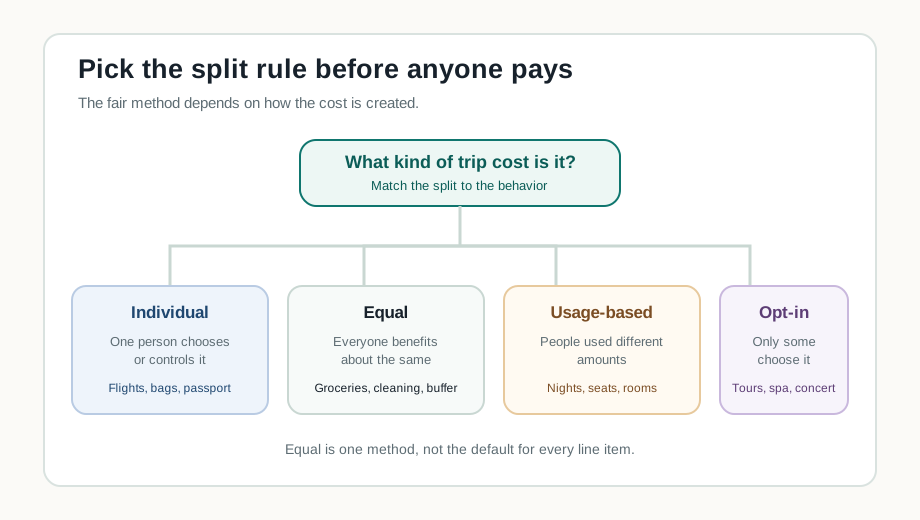
Use four rules:
| Cost type | Best split method | Example |
|---|---|---|
| Individual | Each traveler pays their own | Flights, checked bags, passport fee |
| Shared equally | Everyone benefits about equally | Cleaning fee, shared groceries, group buffer |
| Usage-based | People used different amounts | Lodging nights, rental car seats, parking |
| Opt-in | Only some people chose it | Concert, spa day, excursion, private room upgrade |
Do not start with "split everything evenly." Start with "what kind of cost is this?"
Example: Three Couples, One Late Arrival
Imagine six travelers renting a house for a four-night long weekend:
| Cost | Amount | What happened |
|---|---|---|
| House rental | $2,400 | Four people stay 4 nights, two people arrive one night late |
| Rental car | $600 | Four people use the car, two skip it |
| Groceries | $540 | Everyone shares |
| Cleaning and shared fees | $180 | Everyone shares |
| Trip buffer | $360 | Everyone shares |
| Optional boat tour | $360 | Four people opt in |
If the group splits everything equally, each person pays $740.
That sounds simple, but it is not fair:
- The two late-arriving travelers would pay for a lodging night they did not use.
- The two travelers skipping the rental car would subsidize it.
- The two people skipping the boat tour would pay for an activity they did not choose.
Here is the cleaner split:
| Traveler group | Lodging | Rental car | Shared food, fees, buffer | Optional tour | Fair total |
|---|---|---|---|---|---|
| Four full-stay travelers who use car and tour | $436 | $150 | $180 | $90 | $856 |
| Two late-arriving travelers who skip car and tour | $327 | $0 | $180 | $0 | $507 |
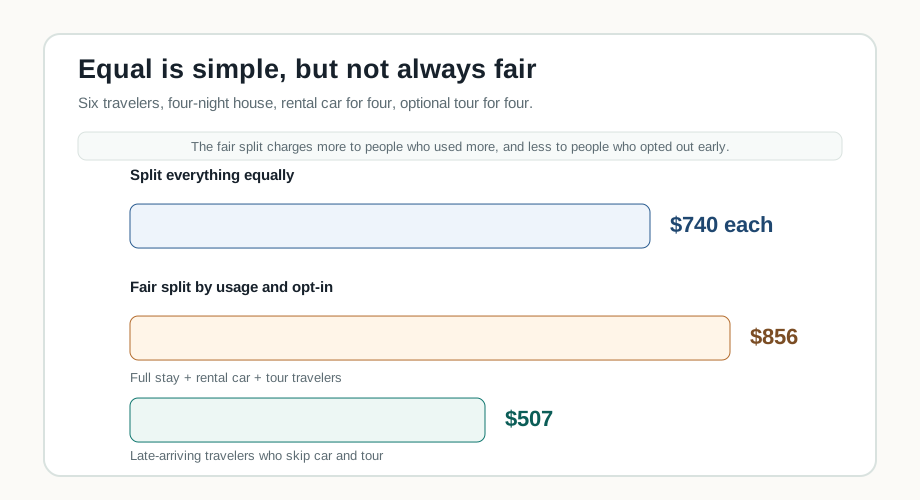
The fair split is not about punishing the full-stay travelers. They used more of the house, car, and tour budget. The late-arriving travelers still pay their share of groceries, cleaning, and the buffer because those are group costs.
Open the prefilled three-couple fair split example to start with the house, car, groceries, shared fees, buffer, and optional boat tour from the example, then map the plan to your group.
Rule 1: Individual Costs Stay Individual
Flights are the classic example. One person may fly from a major hub for $280 while another pays $520 from a smaller market. Splitting flights equally can feel generous, but it hides the real reason the cost differs.
Keep these individual unless the group explicitly agrees otherwise:
- Flights or train tickets.
- Checked bags and seat upgrades.
- Passport or visa costs.
- Airport parking at a traveler's home airport.
- Travel insurance bought individually.
Bureau of Transportation Statistics airfare data is useful as a reality check, but your trip still needs each person's actual origin, dates, and fare choices.
Rule 2: Equal Splits Are For True Group Costs
Equal splitting works when everyone benefits in roughly the same way.
Good equal-split candidates:
- Cleaning fee.
- Shared groceries.
- Shared rideshare from the airport when everyone rides.
- Group booking fee.
- A trip buffer everyone agreed to.
Even then, name the rule before booking. "We are splitting groceries evenly" is much cleaner than "we will figure out groceries later."
GSA per diem rates can help sanity-check lodging and meals because they vary by city and date. For FY 2026, the standard continental U.S. lodging rate is $110 and the standard meals and incidental expenses rate is $68, while many cities have higher rates. Those are federal travel benchmarks, not vacation rules, but they are useful anchors.
Rule 3: Use Usage-Based Splits For Uneven Use
Lodging is where this matters most.
In the example, the house costs $2,400. Four travelers stay four nights each, and two travelers stay three nights each. That means 16 person-nights from the full-stay travelers plus 6 person-nights from the late-arriving travelers, or 22 person-nights total. Divide $2,400 by 22 and the lodging rate is about $109 per person-night.
That gives:
- Full-stay traveler: 4 nights x $109 = about $436.
- Late-arriving traveler: 3 nights x $109 = about $327.
Usage-based splitting also works for:
- Rental cars when only some people ride.
- Parking when only one car is used.
- Private room upgrades.
- Extra hotel nights before or after the main trip.
The rule should be simple enough that everyone can check it in one minute.
Rule 4: Optional Costs Belong To Opt-In Travelers
Optional activities are where resentment grows fastest.
If four people book a $90 boat tour and two skip it, the fair split is not $60 per person across the whole group. It is $90 for each person who opted in.
Use opt-in splitting for:
- Concerts.
- Spa days.
- Private excursions.
- Theme park add-ons.
- Fine-dining reservations.
- Rental gear that only some people need.
Optional does not mean last-minute. It means each person can see the cost and choose before the group commits.
Rule 5: Separate Who Owes From Who Paid
Splitting costs and tracking payments are different jobs.
One person may put the house on their card. Another may book the rental car. A third person may buy tour tickets. The fair split says who owes what; the payment tracker says who fronted the cash and who needs reimbursement.
Before the trip, record:
| Item | Split method | Paid by | Due date |
|---|---|---|---|
| House deposit | Usage-based lodging split | Alex | Today |
| Rental car | Four riders only | Bri | Booking date |
| Boat tour | Opt-in travelers | Cam | Two weeks before trip |
| Groceries | Equal split | Whoever shops | During trip |
That turns reimbursement from a memory test into a checklist.
Make the Example Your Own
Start from the article assumptions, then test three versions:
- Change the lodging nights, car riders, and optional-tour travelers to match who actually uses each item.
- Keep equal-split items, usage-based items, and opt-in items as separate lines.
- Track who paid each deposit separately from the final fair total.
Then share the per-traveler totals before anyone pays a large deposit.
For a broader budget example, start with How Much Should You Budget for a Group Trip?.
A Simple Script To Avoid Awkwardness
Send the group something like this before booking:
"I put the trip into the planner so we can split costs by how they actually work. Flights are individual, the house is by nights stayed, the rental car is for riders, groceries/fees/buffer are equal, and optional activities are opt-in. Please check your total before we book."
That message is not fussy. It is kind. It gives everyone the rules early enough to object, opt out, or budget honestly.
Sources
- Bureau of Transportation Statistics: Air Fares
- GSA FY 2026 per diem bulletin
- GSA per diem rates lookup
Educational budgeting content only. This is not financial, tax, or travel advice.
More Group Trip Planner articles
Practical examples that connect the calculator to real planning decisions.