A local move and a long-distance move can both involve boxes, movers, and a truck. The pricing logic is still different.
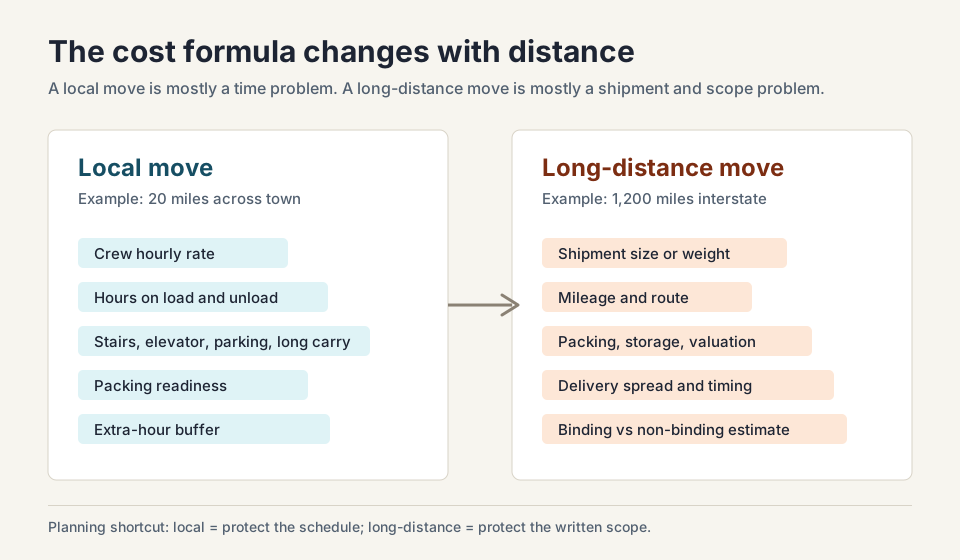
A local move is usually a time problem: how many movers, how many hours, how hard the load and unload will be, and whether the building slows the crew down. A long-distance move is usually a shipment problem: how much stuff is being transported, how far it goes, how it is routed, what services are included, and how much price risk is left in the estimate.
That is why a 20-mile apartment move can feel expensive for one afternoon, while a 900-mile move can look reasonable in the quote and still require a much larger cash plan. The formulas are not the same.
Short Answer
For most planning purposes:
| Move type | Main pricing model | What changes the number fastest | Best first planning question |
|---|---|---|---|
| Local move | Crew hours, hourly rate, minimum booking window | Stairs, elevators, long carries, packing status, parking, number of rooms | How many hours can this realistically take? |
| Long-distance move | Shipment size, mileage, route, service level, estimate type | Weight or inventory, distance, packing, storage, delivery spread, valuation, quote scope | What exactly is included in the written estimate? |
A useful planning workflow separates those drivers instead of trying to force both moves into one average number.
What Counts as a Local Move?
A local move is usually a short-distance move within the same metro area or local service territory. Many consumer cost guides use a rough under-50-mile definition, though state rules and mover policies can vary.
For planning, the key point is not the exact mileage cutoff. It is the way the job is priced. Local movers often quote an hourly crew rate with a minimum number of hours. If the truck is loaded, driven, and unloaded faster, the bill can be lower. If the elevator is slow, the hallway is long, the crew has to circle for parking, or half the boxes are not packed, the same move can take longer.
HomeGuide's 2026 moving cost guide describes local moves as commonly priced by mover-hour with minimum booking windows, while long-distance moves depend more on mileage and shipment weight. Forbes Home similarly notes that local movers may charge by the hour, while long-distance movers often quote a flat rate.
That is the practical difference: a local move is sensitive to friction on move day.
What Counts as a Long-Distance Move?
A long-distance move is not just a longer local move. Once a move crosses state lines, it becomes an interstate household-goods move for federal consumer-protection purposes. The Federal Motor Carrier Safety Administration explains that even when part of the transportation uses another mode, the move can still be interstate if the goods cross a state line and a mover is involved.
Long-distance pricing tends to care about a different set of variables:
- Shipment size or weight
- Distance and route
- Origin and destination access
- Packing, crating, storage, and other add-on services
- Delivery window and timing
- Valuation or coverage choices
- Whether the estimate is binding, non-binding, or binding not-to-exceed
This is why a long-distance estimate deserves more line-by-line review than a simple local hourly quote. The low number may not include the same scope as the higher quote.
One Household, Three Distance Tiers
Imagine the same two-bedroom household making three possible moves:
| Scenario | Distance | Planning model | Mover-related planning amount | What drives the estimate |
|---|---|---|---|---|
| Across town | 20 miles | Local hourly crew | $1,400 | 4 movers, 6 hours, stairs, packing readiness |
| Regional relocation | 250 miles | Hybrid mileage and service scope | $3,900 | Truck distance, loading labor, delivery timing, supplies |
| Interstate move | 1,200 miles | Shipment and route | $6,800 | Inventory, mileage, packing, valuation, delivery spread |
Those amounts are scenario inputs, not market quotes. They are useful because they show how the question changes.
For the 20-mile move, the most important planning work is reducing wasted time: reserve the elevator, pack before the crew arrives, secure parking, label rooms, and separate anything that is not going on the truck.
For the 1,200-mile move, the most important planning work is defining the shipment: what is included, what is packed by the mover, whether storage is needed, what valuation applies, and what can change the final bill.
Why the Same Furniture Costs More to Move Farther
Distance matters, but not only because of fuel.
For a long-distance move, the mover may be planning driver time, route capacity, shipment consolidation, weigh tickets, warehouse handling, delivery spread, destination labor, and more complex scheduling. Your belongings may not move like a private taxi. They may be part of a route with operational constraints you never see.
That is why long-distance quotes can include language about delivery windows, storage-in-transit, shuttle service, long carry, bulky items, or changed inventory. Each of those terms can affect the final price or the cash timing.
Local moves are more visible. You can often see why the clock is running. Long-distance moves have more hidden logistics, so the estimate language matters more.
The Estimate Type Changes the Risk
For interstate moves, do not treat every written number as the same kind of promise. FMCSA guidance distinguishes non-binding estimates from binding estimates. A non-binding estimate is meant to estimate the expected cost, but it is not a guaranteed final price. A binding estimate is meant to bind the mover to the services and shipment described, unless the scope changes.
That means the question is not only "which quote is cheapest?" A better question is:
Which quote defines the shipment, services, access conditions, valuation, and delivery assumptions clearly enough that I know what could change?
A binding not-to-exceed estimate can be especially useful when available because it can cap the price for the listed shipment while still allowing the final bill to come in lower if the actual shipment is lighter or simpler than expected. But the protection depends on the written scope being accurate.
Where Local Moves Surprise People
Local move surprises usually come from time and access.
Common local move misses include:
- The building requires a certificate of insurance and the move cannot start on time.
- The freight elevator is shared with another resident.
- The truck cannot park close to the entrance.
- The walk from apartment to truck is longer than expected.
- Boxes are open, unlabeled, or still being packed.
- Furniture needs disassembly that was not discussed.
- The crew hits the hourly minimum even though the move is small.
A local move budget should include the mover quote, supplies, tips, building fees, parking permits, cleaning, utility setup, and a small buffer for extra hours.
Where Long-Distance Moves Surprise People
Long-distance surprises usually come from scope and timing.
Common long-distance move misses include:
- The inventory grows after the estimate.
- Packing service is excluded or only partially included.
- The destination needs a shuttle truck because the large truck cannot access the street.
- Storage is needed because move-out and move-in dates do not line up.
- Delivery takes place across a date spread instead of on one exact day.
- Valuation coverage is misunderstood.
- The lowest quote leaves out services that another quote includes.
Before signing, compare quotes in the same categories: transportation, loading, packing, supplies, storage, valuation, bulky items, shuttle or access fees, delivery window, and payment timing.
A Better Way to Budget Both Moves
Use the same calculator, but ask different questions.
For a local move, create these line items:
| Local line item | Example planning amount | Why it matters |
|---|---|---|
| Movers: 4-person crew, 6 hours | $1,200 | Main hourly cost |
| Extra hour buffer | $200 | Elevator or parking delay |
| Packing supplies | $180 | Boxes, tape, mattress bags |
| Building and parking fees | $120 | Avoids day-of delay |
| Tips and move-day food | $150 | Crew and household logistics |
| Local move subtotal | $1,850 | Cash target before deposits or rent |
For a long-distance move, create these line items:
| Long-distance line item | Example planning amount | Why it matters |
|---|---|---|
| Transportation and loading | $4,900 | Core shipment estimate |
| Packing help | $900 | Often excluded or partial |
| Valuation or coverage choice | $250 | Changes risk, not just cost |
| Storage or delivery timing buffer | $700 | Date mismatch risk |
| Travel, lodging, and meals | $650 | Household still has to move |
| Quote uncertainty buffer | $1,100 | Scope changes or non-binding risk |
| Long-distance subtotal | $8,500 | Cash target before new-home deposits |
The exact numbers should come from your quotes and your route. The structure is the point.
Open the prefilled 1,200-mile move scenario to start with the long-distance shipment, packing, storage, travel, and buffer assumptions above, then map the plan to your situation.
Make the Example Your Own
Start from the article assumptions, then test three versions:
- Convert the scenario to a local move by changing the distance tier and replacing shipment costs with crew time, access fees, and extra-hour buffer.
- Convert it to a regional move by keeping some travel and storage risk, but lowering the shipment and timing assumptions.
- Test packing help, valuation, storage, and move date separately so one bundled quote does not hide the real driver.
That last step is the useful part. You are not just adding expenses. You are seeing which assumptions are actually driving the answer.
Quick Rule of Thumb
Use this shortcut when you are still early:
- If the move is local, protect the schedule. Every avoidable delay can turn into paid time.
- If the move is long-distance, protect the scope. Every unclear service, inventory item, access condition, or delivery assumption can turn into price risk.
Then put the numbers in separate lines. A single average hides the thing you most need to manage.
Related Reading
For the broader all-in cash plan, read How Much Does It Cost to Move in 2026?.
Sources
- HomeGuide moving company cost guide
- Forbes Home 2026 moving company guide
- moveBuddha 2026 movers cost guide
- FMCSA interstate move FAQ
- FMCSA estimating charges guidance
This article is educational planning content, not a mover quote or legal advice. Get written estimates from licensed movers before signing a contract.
More Moving Cost Calculator articles
Practical examples that connect the calculator to real planning decisions.